September 13, 2026
A greenhouse gives tomatoes the one thing the British summer rarely guarantees: a long, warm, sheltered season. Under glass you can ripen varieties that would sulk outdoors, pick your first cherries in July, and still be gathering fruit in October. Get the timing right and it feels almost effortless. Get it wrong and you will spend August staring at a plant the height of a door with four green tomatoes on it.
The calendar below suits an unheated greenhouse. Dates shift by two or three weeks depending on where you garden, so treat them as a framework rather than a rulebook.
The season at a glance
- Late February to mid-March: sow seed somewhere warm.
- April: pot on, and prepare borders, grow bags or large pots.
- Late April to mid-May: plant into the greenhouse once nights stay above 10°C.
- June: side-shoot, tie in, tap flowers to help pollination, start shading.
- July to September: feed weekly, water daily, harvest as fruit colours.
- Late September to October: stop the plants, ripen the last trusses, clear out.
February to April: sowing, potting on and preparing the greenhouse
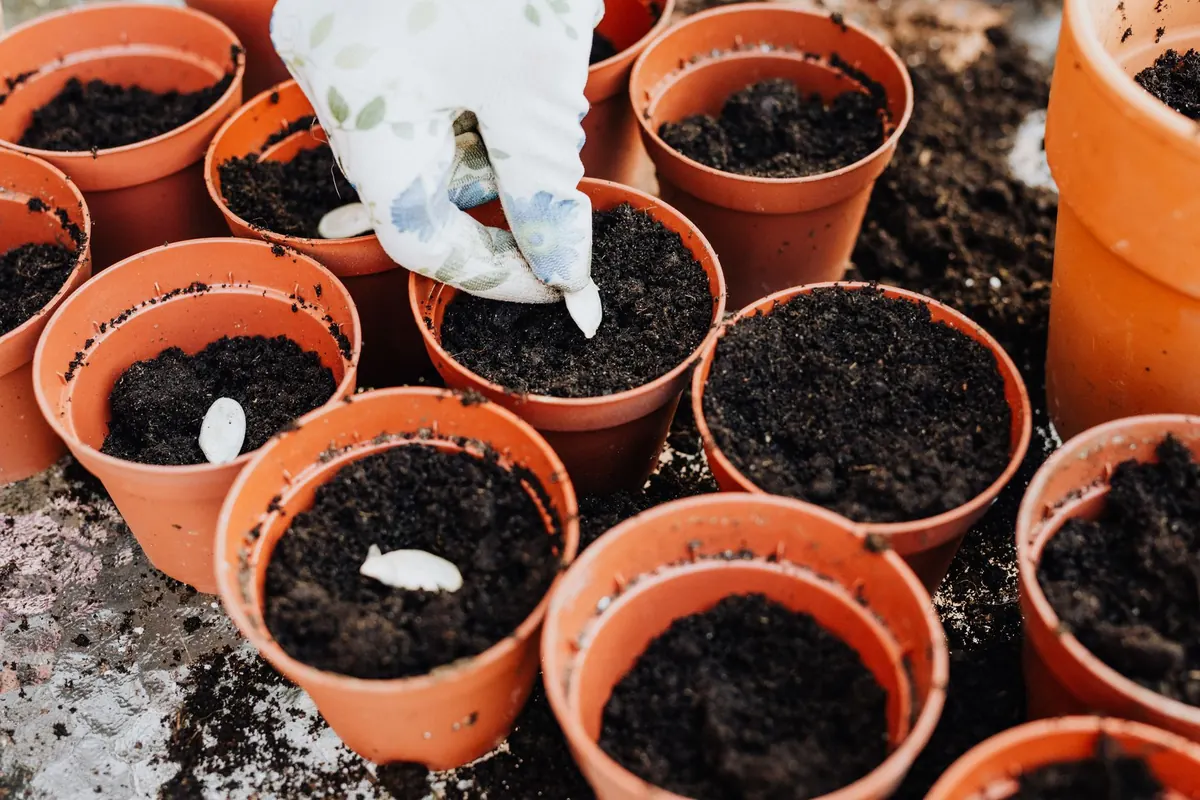
Sow from late February at about 18–21°C. Fill small pots or modules with moist seed compost, sow the seed 1cm deep, and cover. Seedlings appear within a week or so. Move them somewhere bright and slightly cooler the moment they are up — warmth plus poor light gives the pale, stretched stems that never recover.
Prick out into 9cm pots when the first true leaves appear, planting slightly deeper than before. By mid-April you want sturdy plants around 20–25cm tall, ready for the greenhouse once cold nights are past.
Choosing varieties
For cordons, 'Gardener's Delight' and 'Sungold' crop heavily with excellent flavour, while 'Shirley' and 'Ferline' suit larger fruit. Bush types such as 'Tumbler' need no side-shooting and earn their place in pots. For sauce, 'Roma' remains the dependable paste tomato.
Border, grow bag or pot?
Border soil holds water and nutrients best, but it needs replacing or improving each year — tomatoes are heavy feeders and soil-borne problems build up quickly. Grow bags are convenient yet dry out fast; two plants per bag is plenty. Large pots of 10 litres or more work well and can be moved. Whichever you use, mix in a handful of general-purpose fertiliser and never fresh manure.
May: planting out and first support
Plant out once the greenhouse stays above about 10°C at night. Space cordons 45–60cm apart, water in well, and give each one a cane or a length of string dropped from the roof and anchored at the base. Twist the stem gently around it as the plant grows.
Resist crowding. Good airflow is your best defence against botrytis and mildew, and a packed greenhouse is a miserable place to work in July.
June: side-shooting, training and pollination
Cordon tomatoes grow as a single stem. Each week, snap out the shoots that appear where a leaf meets the main stem, while they are still small enough to pinch between finger and thumb. Bush varieties are left alone.
Tomatoes pollinate themselves, but under glass there is often no breeze to shake the pollen loose. Tap each flowering truss sharply at midday, or stroke the flowers with a soft brush. Open the vents early on warm days and damp down the path; fruit set is poor above roughly 27°C and in very dry air. From late June, shade the glass with netting or shading paint.
July and August: feeding, watering and harvesting
Begin feeding when the first truss has set fruit: a high-potash tomato feed once a week, rising to twice weekly once plants carry three or four trusses. Nitrogen-rich feeds simply build leaves and delay the crop.
Water little and often, at the same time each day, aiming at the soil rather than the leaves. Irregular watering is the usual cause of blossom end rot and of splitting after a dry spell. In a heatwave, plants may need water twice a day; a drip system on a timer earns its keep.
Miss a day's watering in a July heatwave and the trusses will remind you of it for a fortnight.
Pick fruit as it colours. Leaving ripe tomatoes on the plant slows the trusses above, and fruit picked with the calyx attached keeps a little longer.
A quick diagnosis list
- Sunken brown patch at the base of the fruit: blossom end rot, caused by uneven watering rather than a shortage of calcium in the soil. Water more consistently.
- Yellowing between the veins of older leaves: often magnesium deficiency. A foliar feed of Epsom salts in water helps.
- A cloud of small white insects when you brush a plant: whitefly. Hang yellow sticky traps and introduce biological controls early.
- Fine webbing and speckled leaves in hot, dry spells: red spider mite. Damp down more often.
- Grey fuzzy mould on stems: botrytis. Cut out affected growth, improve ventilation, and stop wetting the foliage.
September and October: ripening the last trusses
Around late August or early September, pinch out the growing tip two leaves above the top truss. The plant stops producing flowers and concentrates on ripening what it already carries. Remove a few leaves below the lowest truss so light reaches the fruit — a couple at a time, not a strip.
As nights cool, close the vents earlier in the afternoon to hold warmth, and cut watering back to reduce splitting. Green fruit can be ripened indoors on a sunny windowsill or in a drawer with a ripe banana, and the rest makes chutney. Clear the plants, send diseased material to green waste rather than the compost heap, then wash down the glass and frame.
Small habits that make the difference
Keep a rough notebook: sowing dates, when the first truss set, which varieties cropped best in your greenhouse. Two or three seasons of notes will give you a calendar tailored to your own plot rather than a general guide.
Water consistently, feed from the first set fruit, keep the air moving, and do not sow too early. Those four habits grow more tomatoes than any gadget on the market.
Photo: Igor Passchier / Pexels